Category: Antalya Dental Planning

  • How to check a dentist’s credentials in Antalya

    Dentist credentials in Antalya: use the questions below to establish what is known, what depends on an assessment and which details you need in writing.

    Start with the person who will treat you. Ask for their full name as it appears in professional records, their role in the proposed care, and the exact name and address of the facility. An enquiry handled by a coordinator may involve several different clinicians.
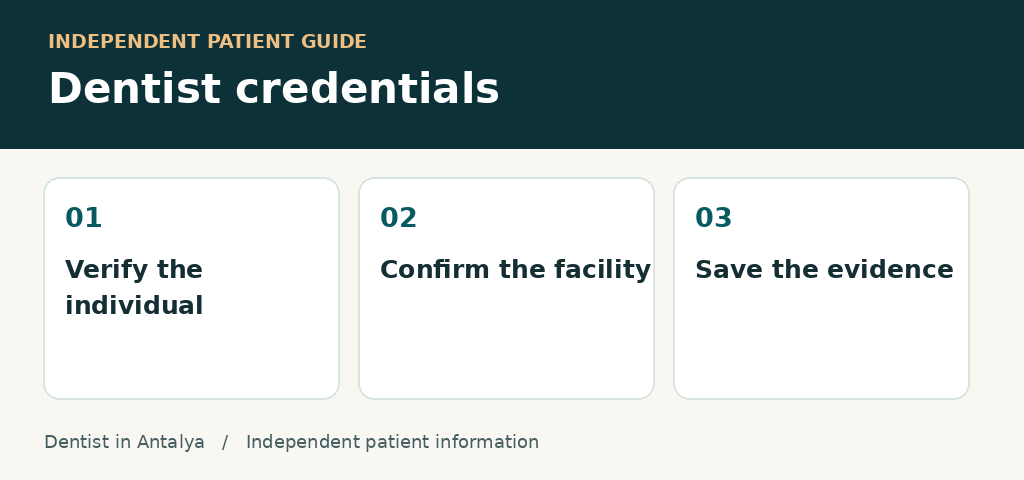
    Dentist credentials: Verify the individual, Confirm the facility, Save the evidence
    Three checks to take into your next discussion.

    Separate the dentist and the facility

    Ask who performs each stage, who signs the treatment plan and who provides follow-up. Ask the facility to identify the relevant Turkish authority and to explain how you can independently check registration and any authorisation it says it holds. Keep the names in writing so you can compare them with the consent form at the appointment.

    Ask for the dentist’s registered name including Turkish spelling, the role they will play and the name that will appear on the clinical record. If a website shows a team photo, ask which person will actually examine you and which person would carry out the proposed treatment.

    Read credentials in context

    A certificate of attendance at a course and a formal specialist qualification convey different information. If a title matters to your decision, ask for its issuing body and how that title is recognised locally. If a dentist will be substituted, request the same information for the replacement before agreeing.

    When the clinic brand and legal facility name differ, ask for both and the exact address of the treatment room. Check whether the address used for the consultation differs from where a procedure would take place. Record how the provider explains any difference.

    A practical email

    “Could you send the full names and roles of everyone carrying out my treatment, the legal facility name, and the official route for checking those details?” Save the response and take it to your dentist at home if you want help interpreting the proposed work.

    If an organiser introduces you to a dentist, ask the facility to confirm the clinician and appointment directly. You can compare both replies without sharing medical records with an additional party. Ask the facility which official register or authority to contact and what spelling or reference number it needs.

    Check what happens if the plan changes

    A clinician’s membership badge, published cases or course certificates may answer specific questions about training. Ask who issued each credential and whether it is a professional registration, a recognised specialist qualification or a record of course attendance. Request an explanation of how the experience relates to the treatment being proposed.

    Apply this to a real decision

    If the clinician named on a quote changes just before your visit, ask for the replacement’s details and who takes responsibility for follow-up. Compare the replacement’s role with what you agreed. When the difference is material to your decision, discuss whether you can reschedule while you verify the information.

    Dentist credentials: questions to keep on hand

    Write these questions down before speaking to the provider. Record the answer, who gave it and the date. If a reply is provisional, note what still has to happen before it can be confirmed.

    • What is the treating dentist’s registered name?
    • Which authority can confirm the facility’s details?
    • Who takes responsibility if the clinician changes?

    Keep the dentist credentials notes with the relevant quote or appointment details. If two replies differ, ask each person to confirm the current position in writing and mark the earlier answer as superseded. Check the final position before paying for the next stage or booking travel that depends on it.

    Before you make the next decision

    Use the dentist credentials questions to separate decisions you can make now from decisions that need a clinician’s assessment. A written answer can help you see who has agreed to do what. If one important detail is still open, identify the person responsible and the point at which you will need the answer.

    Patient information source

    General Dental Council: going abroad for dental treatment

    Dental Council of Ireland: choosing a dentist

    Explore all Antalya dental guides

  • Dental consultation questions to ask in Antalya

    Dental consultation questions in Antalya: use the questions below to establish what is known, what depends on an assessment and which details you need in writing.

    A dental consultation is your opportunity to clarify what the dentist has found and what choice you have. Separate questions about the condition of your teeth from questions about what a package includes.

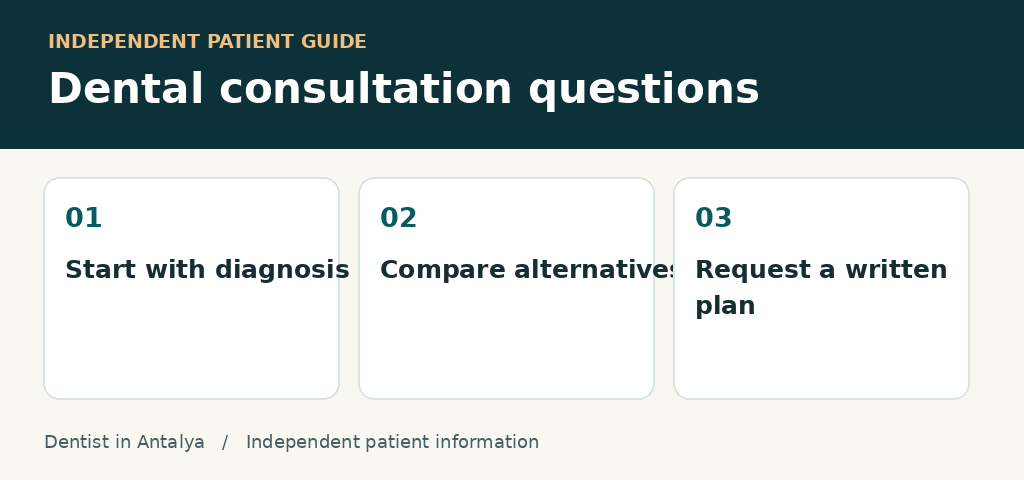
    Dental consultation questions: Start with diagnosis, Compare alternatives, Request a written plan
    Three checks to take into your next discussion.

    Start with the diagnosis

    Ask which teeth need attention, what findings support the diagnosis and what remains uncertain. If the first plan was based on photographs, ask which decisions require examination or imaging in person. Invite the dentist to explain what would change the plan.

    Give the dentist your own priorities at the start. For example, say whether the biggest concern is discomfort, an existing restoration that keeps failing or an appearance change. Ask which findings relate to that concern and which proposed procedures address a separate issue.

    Discuss alternatives and timing

    Ask what would happen if you waited, whether a smaller intervention would be reasonable, and what each alternative involves. Find out which steps take place during the first visit, which decisions can wait, and when the next review would occur.

    Ask the dentist to distinguish what they can confirm today from what depends on an examination, images or a later review. Write down which recommendation is provisional and what new finding could change it. This is particularly useful when an initial quote arrived before you travelled.

    Close with a written record

    Before paying a deposit, request the tooth numbers, proposed procedures, appointment stages and full estimate in one document. Write down the questions you still have and take the document away. Compare the clinical reasoning first, then the price.

    Request one explanation per tooth or area if several are involved. Ask why each procedure is being proposed, what a less extensive option would involve and what the dentist would expect to happen if you waited. Ask for time to consider irreversible decisions if you need it.

    Check what happens if the plan changes

    For a multi-visit proposal, ask what you would leave each appointment with, which stages might require laboratory work and whether temporary work or later reviews are included in the estimate. If part of the plan would take place after you return home, name who would carry it out.

    Apply this to a real decision

    Before you leave the appointment, read back the diagnosis, next step and estimated cost in your own words. Ask the dentist to correct any misunderstanding. Request a copy of the tooth numbers and proposed stages so a second dentist can understand which decisions are still open.

    Dental consultation questions: questions to keep on hand

    Write these questions down before speaking to the provider. Record the answer, who gave it and the date. If a reply is provisional, note what still has to happen before it can be confirmed.

    • Which findings support the diagnosis?
    • What alternatives are reasonable for my situation?
    • What could change the proposed procedure or cost?

    Keep the dental consultation questions notes with the relevant quote or appointment details. If two replies differ, ask each person to confirm the current position in writing and mark the earlier answer as superseded. Check the final position before paying for the next stage or booking travel that depends on it.

    Before you make the next decision

    Use the dental consultation questions questions to separate decisions you can make now from decisions that need a clinician’s assessment. A written answer can help you see who has agreed to do what. If one important detail is still open, identify the person responsible and the point at which you will need the answer.

    Patient information source

    General Dental Council: going abroad for dental treatment

    Dental Council of Ireland: choosing a dentist

    Explore all Antalya dental guides

  • How to get a second dental opinion in Antalya

    Second dental opinion in Antalya: use the questions below to establish what is known, what depends on an assessment and which details you need in writing.

    A second dental opinion is most useful when the reviewing dentist can see the findings behind the first proposal. For work involving several teeth or permanent changes, allow time to request the material before travel.

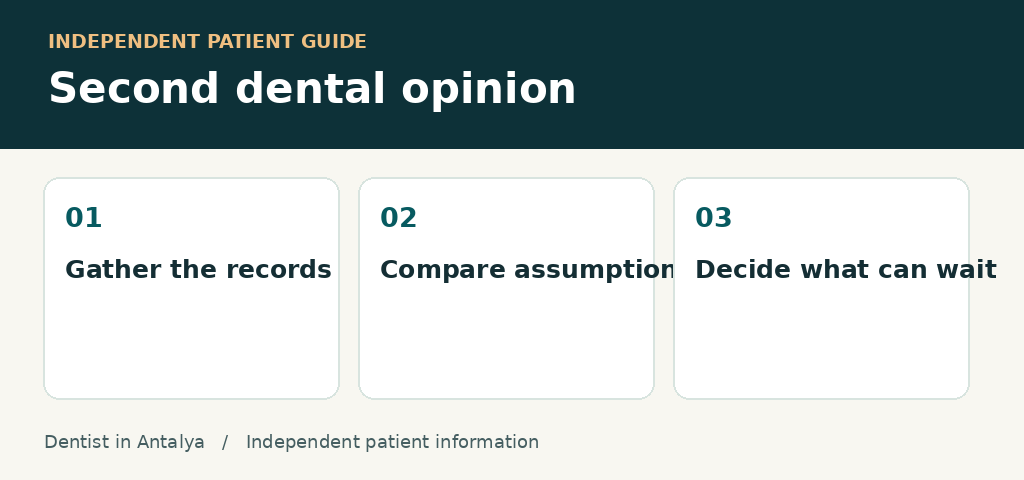
    Second dental opinion: Gather the records, Compare assumptions, Decide what can wait
    Three checks to take into your next discussion.

    Build a useful record

    Ask for the written diagnosis, tooth chart, available images in a readable format and proposed sequence of treatment. Ask whether the dentist who reviews them needs an examination of their own. Share records through a channel agreed with that practice.

    Ask the first practice for a written treatment proposal, tooth numbers, relevant images and a short description of the findings. If it has only issued a package quote, request the clinical reasoning separately. The reviewing dentist can say which records can be used and whether a fresh examination is needed.

    Ask why plans differ

    Two plans may differ because the dentists examined different evidence, or because they give different weight to preserving tooth structure, convenience or future maintenance. Ask each dentist to explain their assumptions and which findings would cause them to revise their plan.

    When arranging an independent review, describe the decision you need to make. For example, ask how much treatment is necessary now or whether a staged plan could meet your priorities. A specific question is more useful than asking whether a previous quote is generally good.

    Keep the decision separate from travel

    A pre-booked flight or hotel can create pressure to accept a plan that has changed. If the proposals still differ on irreversible work, ask which steps can safely wait and discuss that question with a dentist before proceeding.

    Put both proposals side by side by tooth and by stage. Note when the clinicians worked from different records, examined you at different times or placed different emphasis on preserving teeth, replacing missing teeth or limiting appointments. Ask each to explain the assumptions behind their proposal.

    Check what happens if the plan changes

    If the recommendations differ on a permanent change, ask what could resolve the disagreement. The answer may be another examination, additional records or clarification of your preferences. Ask which decisions are time-sensitive and which can wait while you consider the options.

    Apply this to a real decision

    A second opinion can be useful even when both dentists agree. Ask the reviewing clinician to explain the main risks, what follow-up is realistic at home and which records would be needed later. Add those answers to your comparison so it covers more than the procedure itself.

    Second dental opinion: questions to keep on hand

    Write these questions down before speaking to the provider. Record the answer, who gave it and the date. If a reply is provisional, note what still has to happen before it can be confirmed.

    • What records does the reviewing dentist need?
    • Where do the two proposals differ tooth by tooth?
    • Which decisions can wait for clarification?

    Keep the second dental opinion notes with the relevant quote or appointment details. If two replies differ, ask each person to confirm the current position in writing and mark the earlier answer as superseded. Check the final position before paying for the next stage or booking travel that depends on it.

    Before you make the next decision

    Use the second dental opinion questions to separate decisions you can make now from decisions that need a clinician’s assessment. A written answer can help you see who has agreed to do what. If one important detail is still open, identify the person responsible and the point at which you will need the answer.

    Patient information source

    General Dental Council: going abroad for dental treatment

    Explore all Antalya dental guides

  • Dental consent in Antalya: what to discuss

    Dental consent in Antalya: use the questions below to establish what is known, what depends on an assessment and which details you need in writing.

    Consent works best as a conversation you understand and can revisit. Ask the dentist to explain the purpose of each proposed step and what it changes for you.

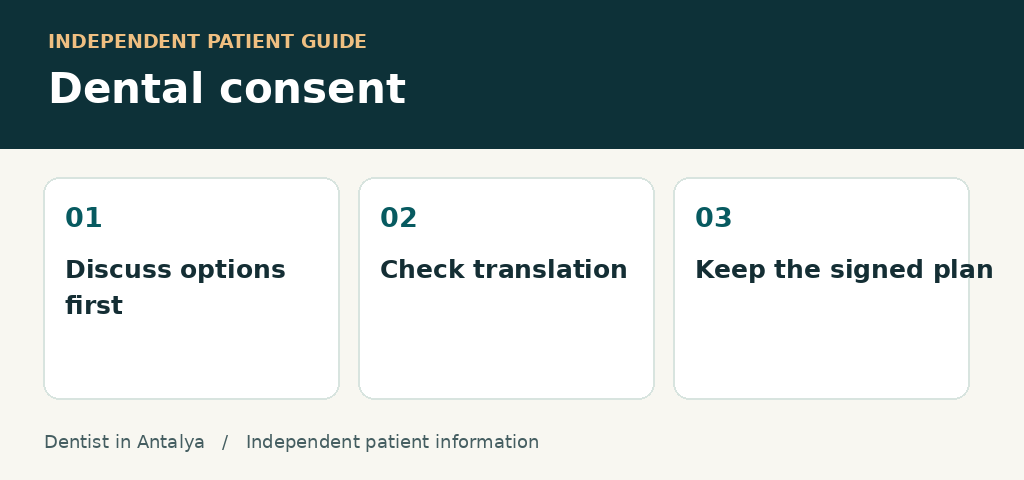
    Dental consent: Discuss options first, Check translation, Keep the signed plan
    Three checks to take into your next discussion.

    Check the language of the discussion

    Ask who will interpret if needed, what language the written materials use and whether you can read the form before treatment day. Practise summarising the plan back in your own words. Ask for a clearer explanation of any point you cannot describe.

    Ask the clinician to state the diagnosis, alternatives and intended outcome in words you understand. If a term is unfamiliar, ask for a plain-language description. Summarise what you heard and invite the dentist to correct your understanding before discussing the consent form.

    Discuss changes while you can decide

    Ask what would happen if the examination or procedure revealed an unexpected finding. If a different procedure is proposed, find out who would explain the alternatives, how the price would change and whether you can take time to decide.

    If an interpreter is needed, ask who will interpret and how the dentist will confirm you can follow the explanation. Ask whether a translated copy of the written plan is available and when you can read it. Note any point where the translation and the form appear to describe different work.

    Keep the documents you agreed to

    Request a copy of the signed form and latest plan. Check that they describe the same procedures and teeth. If anything is unclear, ask the treating dentist to reconcile the difference while you can still make an informed decision.

    For procedures on several teeth, check the tooth numbers and planned work one by one. If the plan was previously based on photographs, identify the parts that remain provisional until examination. Ask what findings would lead to a different procedure.

    Check what happens if the plan changes

    Ask how a change would be discussed and documented. For example, if the dentist proposes additional work after examining you, request the reason, options, cost and whether it can safely wait. If needed, ask for time to decide before signing any revised form.

    Apply this to a real decision

    Keep copies of the signed form, the current estimate and the clinical plan in the same place. If anything changes later, date the revised document and check that it identifies the correct teeth and procedures. Ask who can answer questions about the agreed plan.

    Dental consent: questions to keep on hand

    Write these questions down before speaking to the provider. Record the answer, who gave it and the date. If a reply is provisional, note what still has to happen before it can be confirmed.

    • Can I read the information before treatment day?
    • Who will explain any change in my language?
    • Does my copy match the current plan?

    Keep the dental consent notes with the relevant quote or appointment details. If two replies differ, ask each person to confirm the current position in writing and mark the earlier answer as superseded. Check the final position before paying for the next stage or booking travel that depends on it.

    Before you make the next decision

    Use the dental consent questions to separate decisions you can make now from decisions that need a clinician’s assessment. A written answer can help you see who has agreed to do what. If one important detail is still open, identify the person responsible and the point at which you will need the answer.

    Patient information source

    General Dental Council: going abroad for dental treatment

    Explore all Antalya dental guides

  • Dental X-rays in Antalya: questions before a visit

    Dental x-rays in Antalya: use the questions below to establish what is known, what depends on an assessment and which details you need in writing.

    If a dentist requests images before or during an Antalya appointment, ask what clinical question each image would help answer and what decisions depend on it.

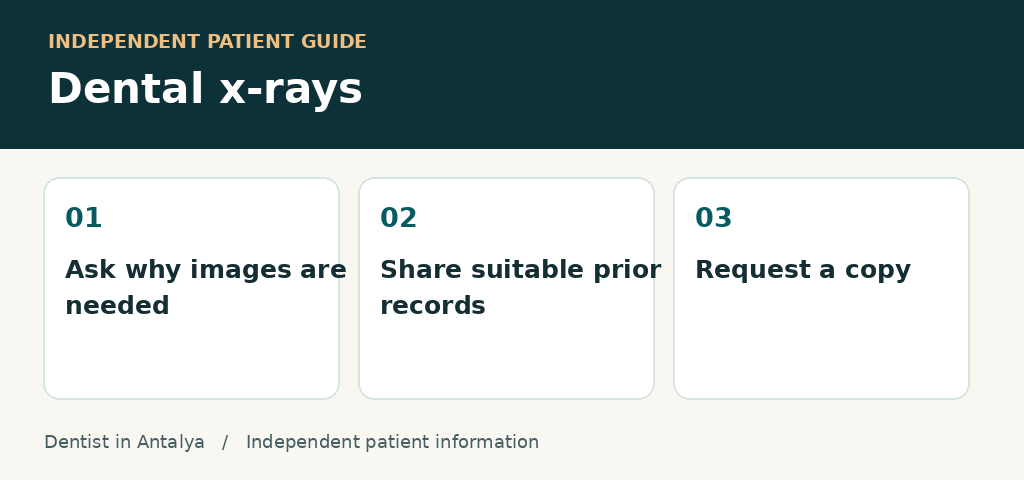
    Dental x-rays: Ask why images are needed, Share suitable prior records, Request a copy
    Three checks to take into your next discussion.

    Bring useful prior records

    Ask whether your previous dental images or reports could help and what file type the practice can read. Agree a secure transfer route. The treating dentist can explain whether the images are recent enough or whether a new examination is needed.

    If new images are proposed, ask what the dentist expects to learn from them. Find out which decision depends on the result. Ask the dentist to explain the difference between images that are useful for preliminary planning and findings that need to be checked at an appointment.

    Ask about the decision

    Discuss how the image could change the proposed plan and when you will hear the findings. Ask which decisions can be made remotely and which need an in-person assessment. Mention relevant health information directly to the clinician.

    Ask your usual practice what existing records it can provide and how they can be transferred. Ask the treating clinician which files it can open and whether a report is useful. Give consent for a direct transfer if you agree and both practices can arrange it.

    Take the records with you

    Request any relevant report and the image file, where available. If another dentist will be involved in follow-up, ask what format that practice prefers and obtain consent arrangements for direct sharing if needed.

    Once the dentist has reviewed the images, ask how the findings affect the proposal. If one decision remains uncertain, ask what other information is needed and when you will be able to review the options. Request a revised estimate if the recommended procedures change.

    Check what happens if the plan changes

    Before leaving, ask which images or reports are relevant to follow-up and how you can access them. Keep the date, the area examined and the dentist’s written summary with the files. Check the export or access link before the practice closes.

    Apply this to a real decision

    If another dentist will review the work, ask what the receiving practice needs and how it wants the information sent. A screen photograph might help explain what you saw, but ask the practice to confirm whether it needs the original file or an export.

    Dental x-rays: questions to keep on hand

    Write these questions down before speaking to the provider. Record the answer, who gave it and the date. If a reply is provisional, note what still has to happen before it can be confirmed.

    • What decision would each image help the dentist make?
    • Could suitable existing images be used?
    • What should I take back for follow-up?

    Keep the dental x-rays notes with the relevant quote or appointment details. If two replies differ, ask each person to confirm the current position in writing and mark the earlier answer as superseded. Check the final position before paying for the next stage or booking travel that depends on it.

    Before you make the next decision

    Use the dental x-rays questions to separate decisions you can make now from decisions that need a clinician’s assessment. A written answer can help you see who has agreed to do what. If one important detail is still open, identify the person responsible and the point at which you will need the answer.

    Patient information source

    General Dental Council: going abroad for dental treatment

    Explore all Antalya dental guides

  • Dental care checklist for Antalya: before you go

    This dental care checklist helps you decide what to confirm before travelling to Antalya for an appointment. Work through it before paying a deposit, then revisit it when the dentist has assessed you in person. A useful answer is one you can record, verify and use if the plan changes.

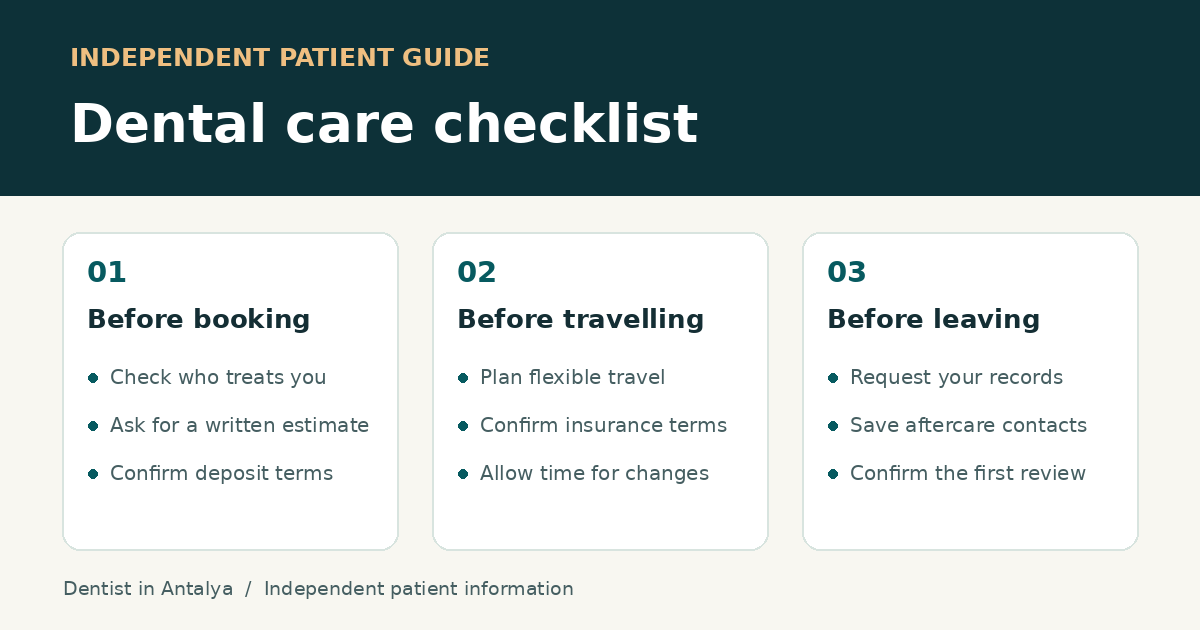
    Dental care checklist for booking, travelling and returning home
    What to check before booking, before travelling and before leaving Antalya.

    1. Who will carry out each stage?

    Ask for the treating dentist’s full name and the name and address of the facility. If different people handle assessment, treatment and review, write down their roles. Ask the provider which official channel you can use to verify professional details. Keep the original replies, especially if a booking contact and the treating facility use different names.

    2. What is the diagnosis and what could change it?

    Ask which teeth the dentist is concerned about, why each procedure is suggested and whether an in-person examination or imaging could change the proposal. If you have received a quote based on photographs, mark it as provisional in your notes. Discuss whether waiting, treating fewer teeth or seeking a second opinion would be reasonable in your situation.

    3. What is included in the estimate?

    Ask for an itemised estimate that identifies the proposed work, the payment currency and the stages when payments fall due. Check whether imaging, temporary work and follow-up visits are included. Compare your total budget separately by adding flights, accommodation and potential travel changes. Record who receives any deposit and what happens if the dentist changes the proposed treatment after examination.

    4. What should I arrange before travelling?

    Put each appointment on a separate row with the address, the planned procedure and the latest time the provider expects to confirm it. Ask which dates depend on laboratory work or the dentist’s review. Check the terms for changing flights and extending accommodation. Tell your insurer that the trip involves planned dental care and ask for written confirmation of any cover you intend to rely on.

    5. How will I decide if the plan changes?

    Ask who will explain a change, whether you can discuss it in a language you understand and when you will receive the revised price. For example, if a plan for two crowns becomes a proposal for four, ask for the reason for the additional work and which decisions can safely wait. Give yourself time to consider the answer before signing or paying.

    6. What records should I take home?

    Request a summary of what was actually done, an itemised invoice, instructions and copies of relevant images when available. If treatment involved a device or restoration, ask for identifying details that may help another dentist assess it later. Open electronic files before leaving and ask how your dentist at home can request a secure copy with your consent.

    7. Who will help if I have a concern after returning?

    Ask for routine and urgent contact routes and check who provides the first review. Speak to your dentist at home about what follow-up the practice can offer and the records it would need. Keep these details together with the provider’s aftercare terms. If a concern develops, contact a local dental service for advice about urgency.

    How to use this dental care checklist

    Turn the dental care checklist into three columns labelled Question, Written answer and Next step. If a response is missing, write down who will confirm it and when. For example, “Return visit cost” can stay open until the provider confirms what it covers and your insurer answers separately. Bring the same document to your assessment and date any changes so you can distinguish the initial proposal from the plan you actually agreed to.

    Example: using the dental care checklist to compare two plans

    Imagine one estimate includes an assessment, temporary work and a review, while a second gives only a total and proposes a shorter stay. Use your dental care checklist to mark which details are confirmed. Ask the second practice when temporary work would be fitted, whether a review is included and what happens if the laboratory needs more time.

    Write the answers beside the original estimates. Compare the number of trips and which steps each practice expects to complete before departure. If one plan remains less detailed, keep that uncertainty visible in your dental care checklist instead of assuming the lower figure covers the same work.

    What to put in a one-page trip record

    Keep one page with the facility address, appointment times, expected payments and contact numbers. Add the time zone if you expect to speak with someone in the UK or Ireland from Antalya. Record the version date of the written plan and the name of the person who sent it so you can check that the same document is being discussed at your visit.

    Keep clinical records separately from the trip record. If you want to send photographs, reports or medication details, ask the practice how it accepts patient information securely. A travelling companion can keep the appointment address and timings without needing a copy of your clinical information.

    When to pause your booking

    Pause if you cannot identify who will treat you, if the explanation of what will happen at the first appointment keeps changing, or if you do not have enough information to compare two plans. Ask the practice to confirm the missing points in writing. If it would help, take the proposal and any images to your usual dentist for a second opinion before making a decision.

    Before booking a return flight, check which appointments are fixed and which may change after an assessment. If the provider gives only a broad timeline, ask what must happen before the return date can be confirmed. Keep a record of any later changes to your appointment plan and update your travel arrangements as needed.

    Related guides

    Patient information source

    General Dental Council: going abroad for dental treatment
    Dental Council of Ireland: choosing a dentist

    Explore all Antalya dental guides